GREETINGS FROM GUERNSEY ON GERMAN RADIO -A CONTROVERSIAL BROADCAST!

A message from A.J. Sherwill, was recorded in Guernsey on 1st August, 1940, and subsequently transmitted twice by Bremen Radio. Once on 24th August 1940 and again on 30th August. It was a controversial broadcast when viewed from the UK and also was viewed with some suspicion locally. Keith and I spoke about on the August 1940 episode of the ‘Islands at War’ podcast.  You can listen below.

I thought it merited further examination and explanation than we were able to give it in the podcast.

In this blog I will add some more information and context to this broadcast;  who requested it, who thought it was a good idea, the content of the message and how it came about! I will also talk about the the other message that was recorded but never broadcast.

The idea was first mooted on 5th July 1940 in the meeting of the Controlling Committee, the body formed to run the Bailiwick of Guernsey during the war.  The President of the Controlling Committee was Ambrose Sherwill.

The President informed the Committee that the Commandant of the German Garrison has asked him to prepare a message of approximately 100 words, with a view to being broadcast through the German wireless station. Mr. Stamford Raffles suggested that the Commandant he asked if it can be requested that the British Broadcasting Corporation be asked to re-deliver the message and also that the English papers be asked to copy.

Minutes of the controlling committee 5th July 1940

Stamford Raffles, information officer, and the rest of the Controlling Committee must have thought it was a good idea as they didn’t oppose it and there is no more mention of it in the minutes. It would therefore seem unfair for Ambrose Sherwill to be singled out for criticism. That is if criticism was indeed fair which I will look at further into this blog post.

The Commandant, I use the English spelling but you could refer to him as Kommandant as the German terminology, was Major-Doctor Albrecht Lanz. Lanz was the first Commandant of Guernsey and was killed on the Eastern front during the battle for Smolensk in January 1942.

The Speech!

The speech was recorded by the Germans on 1st August 1940.

This is His Britannic Majesty’s Procurer in Guernsey, Channel Islands speaking to the people of the United Kingdom, and in particular to those who left Guernsey and Alderney during the evacuation which preceded the German occupation. 

I imagine that many of you must be greatly worried as to how we are getting on. Well, let me tell you. Some will fear, I imagine, that I am making this record with a revolver pointed at my head and speaking from a transcript thrust into my hand by a German Officer. 

The actual case is very different. 

The Lieutenant-Governor and Bailiff, Mr. Victor Carey, and every other Island official has been and is being treated with every consideration and with the greatest courtesy by the German Military Authorities. 

The Island Government is functioning. Churches and Chapels are open for public worship. Banks, shops and places of entertainment are open as usual. 

Naturally, the sudden and entire severance of communications with the United Kingdom created innumerable problems with which we have wrestled and are still wrestling.

Perhaps the best indication of the measure of our success will be shown by the latest figures of unemployment, which are as follows: Males unemployed (of whom hardly any are fit for manual labour) 186; females unemployed, 191. Relief by way of public assistance is not above the normal figure. 

The States have set up a Controlling Committee to speed up public business. My friends, Sir 

Abraham Lainé, A.M. Drake, R.O. Falla, R.H. Johns, John Leale, Stamford Raffles, and Dr. A.N. Symons are collaborating with me on this Committee and are working like trojans. 

The conduct of the German troops is exemplary. 

We have been in German occupation for four and a half weeks and I am proud of the way my fellow-Islanders have behaved, and grateful for the correct and kindly attitude towards them of the German soldiers. 

We have always been and we remain intensely loyal subjects of His Majesty, and this has been made clear to and is respected by the German Commandant and his staff. 

On that staff is an officer speaking perfect English – a man of wide experience, with whom I am in daily contact. To him I express my grateful thanks for his courtesy and patience. 

And now let me end on a more personal note. 

To Elizabeth College, the Guernsey Ladies’ College, the Guernsey Intermediate Schools, the Guernsey Primary and Voluntary Schools, to both Teachers and Scholars, all our love and good wishes.

To all men of military age who left here to join His Majesty’s Forces, God speed. To all wives and mothers and sweethearts, God bless you. To all Guernsey children in England, God keep you safe. 

God bless you all till we meet again. 

And to Mary Rose, to John and Dick, Mummy and I send our fondest love and best wishes. 

Tell Diana Raffles that her parents are well and send their love.Will the B.B.C. please re-transmit this message and will the daily papers please publish it

Evening Press 2nd August 1940 from my collection of newspapers.

Some Guernsey folk were angered that he had taken the opportunity to pass a message to his children when they couldn’t get a message to their own. It was however not a selfish act but an effort to prove that the message was genuine.

The German officer recording the broadcast then informed Mrs Sherwill that there was still time for her to record a message.

This is Mrs. Sherwill speaking for the mothers of Guernsey. We are all quite happy and contented with life over here if only we could have news of all our children to whom we send our very dearest love.

They are always in our thoughts and prayers. The Guernsey woman is always cheerful and philosophical under adversity – and the following story is typical of the spirit of the Island both before and since the occupation.

A Guernsey fish-woman in the market said to me just before the arrival of the Germans: “Ah! but ain’t some people awful, say! There’s a woman, she ses to me, she ses: ‘The Germans is to the back of the Island.’ ‘Ah well!’ I ses to her ‘Tell them to come round to the front.

Occupied Guernsey – Herbert Winterflood

Mrs Sherwill’s message was never broadcast, which Ambrose himself thought was probably due to the insolence of the second part which probably irked the Germans.

As for Ambrose’s broadcast that did go ahead although not quite achieving what he, and Stamford Raffles which was to be rebroadcast by the BBC and reported in the UK Newspapers.

The broadcast was barely reported in the Newspapers in the United Kingdom and for good reason. Churchill was reportedly furious. You can read the news coverage below. After that you will find my analysis of was it a good idea and the motivation.

Edinburgh Evening News – Friday 30 August 1940
Image © Johnston Press plc. Image created courtesy of THE BRITISH LIBRARY BOARD.
Hartlepool Northern Daily Mail – Friday 30 August 1940
Image © National World Publishing Ltd. Image created courtesy of THE BRITISH LIBRARY BOARD.

In Guernsey it did make the newspapers. The following comments were made in a leading article in the Guernsey Evening Press of 2nd August, 1940, regarding A.J. Sherwill’s message. One has to bear in mind that the newspaper was subject to German censorship and indeed forced to publish propaganda articles written by the Germans.

We feel sure that everyone in Guernsey will feel a thrill of joy that a message from Mr. A.J. Sherwill, President of the States Controlling Committee, was recorded by him yesterday, and is to be broadcast in the near future from the Bremen Station in Germany, and that the B.B.C. are being asked to re-transmit the message and the daily papers to publish it. 

The message has been made possible by the kind permission of the German Commandant, and it was made on a gramophone record, which has been sent to Bremen for transmission. 

The possibility of some such transmission of good news was made to our Information Officer some days ago, by a representative of this paper and we are glad that a means has been found for putting it into effect.

The actual time of transmission by wireless from Germany is not yet known: it may be expected in the near future, and if Mr. Sherwill’s request is carried out, it is safe to assume that every Sarnian now on the mainland will hear it and, still better, read it at leisure. Mr. Sherwill’s message, in well chosen words, is one that is at once homely, loyal and true to the history of the Island since the evacuation of part of the population and of our life, under changed, but not unhappy, conditions since the German occupation. It is a message such as any Guernseyman, anxious to reassure his loved ones beyond the reach of correspondence, would have himself wished to send, and it is therefore one voice speaking for all and with the heart of each with it.

The thanks of Guernsey will be given to the German Commandant for this happy and considerate gesture, one which all islanders will deeply appreciate.

Guernsey Evening Press of 2nd August, 1940

What about Jersey?

The governing body in Jersey was the Superior Council, the equivalent of the Controlling Committee in Guernsey. Having looked at their minutes and other archive sources I can’t see that they were requested to make a similar broadcast. What is certain is nobody from Jersey made such a broadcast.

I can think of a few reasons for this but these are only my thoughts rather than actually any hard evidence either way. Firstly Jersey had a different Commandant to Guernsey, Captain Gussek who was Commandant in Jersey was a very different character to Lanz who was in charge in Guernsey. He viewed his command of Jersey more as a conquering hero and being of a temporary nature. He was about to lead his men on to the next stage to invade England on Operation Sea Lion. He was therefore less interested in the civilian administration of Jersey and any propaganda to be gained from it.

My second thought on why no broadcast came from Jersey was simply that there was a much smaller number of evacuees to the UK from Jersey. Only about 6,500 people had been evacuated from Jersey’s total population of circa 47,000 as opposed to almost half of the population of Guernsey being evacuated. A similar broadcast from Jersey would therefore have had much less propaganda value.

Analysis of why and was it wise?

As noted above Churchill was reportedly furious. He was noted to be furious about a number of things to do with the Channel Islands i the month of July so it is unsurprising he was furious about this in August. His initial fury was at having to give the islands up at all and then the less than impressive Operation Ambassador which you can read about here. This broadcast just annoyed him further.

With the passage of time and all the information that is available perhaps it is unfair that the speech was viewed by some as sucking up to the Germans and providing propaganda for the Germans.

If you had been in his position, one month into being occupied by the enemy that has rolled across Europe in quick fashion, cut off from a large portion of your population who have been evacuated and are anxious for news of their loved ones who are still in the Channel Islands. What would you do?

At the time he recorded the speech he had no idea how news from the Channel Islands could be sent or if it was ever going to be allowed. Talks about the use of the International Red Cross setting up a message system had not yet begun.

He took the decision, approved by the Controlling Committee, to take this speech and pass the message to those in the UK that their families were safe, that they were being well treated, at that point of the war, and to allay the fears of Channel Islanders in the UK.

Some of what he said may have been slightly naive or maybe it was just a case of at one month in to the occupation he hadn’t as yet get to grips with what he may or may not be allowed to say and hedged his bets. Better to get his message across to those desperate for news rather than recording something that the Germans then refuse to broadcast.

What he probably hadn’t have foreseen was how the German propaganda machine would use it with an introduction stating that it was proof that it wasn’t so bad to be living in an occupied country and that rumours of ill treatment were untrue.

For those that thought Sherwill was going too far and being too co-operative with the Germans and doubted his loyalty to the King they were soon to be proved wrong. In October 1940 he was sent to prison in France for helping Symes and Nicolle when they were here on a commando mission. You can read about that here.

Conclusion

Looking at all the evidence available I really think that it is harsh to say that Sherwill shouldn’t have made the broadcast. He did so with the best of intentions to quell the worries of those that had been evacuated. He had after all been left ‘holding the baby’ when the British government decided to withdraw from the Channel Islands.

In the end the broadcast did no harm to him as he received a knighthood post war and became Baliff of Guernsey from 1946 to 1959. For those not familiar with the role of the Bailiff he is the head of the judiciary and the most senior islander with a non political role. The Baliff also acts as the equivalent of the speaker of the House of Commons in the Guernsey parliment.

I hope that you have enjoyed reading the blog post.

I also co-host a podcast with Keith Pengelley in which we talk about the occupation of the Channel Islands month by month using first hand accounts, diaries and our research in the archives. You can find us on all the major podcast services. Just search “Islands at War” or visit our podcast page here.

You can also follow the blog on Twitter at @Fortress_Island where I share other information and photographs. If you prefer Facebook I also have a page there.

If you would like to receive email notifications of future blogs, you can sign up to the right of this blog post or here. Feel free to look around the website, where I have categorised posts to make them easier to find and other resources such as tours, places to visit and films that may be of interest.

If you have questions or information to share you can contact me by email on Contact@Island-Fortress.Com.

You can also find articles, podcasts, TV appearances and other social media etc here.


I will be adding more as time permits. Thank you for taking the time to read this, and I hope you enjoyed it. Please share it on social media or add a comment if you did. Feedback is always appreciated.

Also happy to be contacted with questions about the war in the Channel Islands, media appearances, podcasts etc.

© Nick Le Huray

CHURCHILL ABANDONED THE CHANNEL ISLANDS OR DID HE?

Recently Dr Gordon Barclay was getting a hard time from some quarters on Twitter, for taking the position that Churchill did not abandon the Channel Islands. Having been tagged by a mutual friend, Andy Bryson, I tweeted a very brief overview of my view of the situation and the oft repeated “Churchill abandoned the Channel Islands and forgot about them” commentary.

It wasn’t possible to cover it in detail in a series of Tweets so I thought I would address it in a blog post. Where the idea of abandonment came from, how it was perpetuated and was it true?

There are a number of reasons this narrative has arisen, and to be honest I did have it on the list of things to blog about but just hadn’t gotten around to it yet. The above has spurred me on to address it now.

The ground rules!

It is important to remember that unlike today, when we take instant communication and access to information for granted, this was not the case during the war years and for many decades thereafter. Sat here in front of my PC with an iPad and iPhone to consult the archives, newspapers and search the information from my own personal collection it is easier to get an overview of what was happening.

Much of the evidence I will present in this blog post was not available until many years after the cessation of hostilities and indeed in some cases not available to the public until recent years.

I am writing this with the benefit of access to this information and viewing it with an objective 2022 lens. Given the emergence of information over time if I had been writing this in the 1950s or 60s my view may have been different.

Where did this come from?

Arguably this comes from a number of sources dating as far back as the summer of 1940. There are also other events or perceived lack of action throughout the war which also relate to this idea that Churchill abandoned and forgot about the Channel Islands.

Firstly it came from the occupation of the Channel Islands in the summer of 1940. The British Government declared us a demilitarised zone with no defences. Some view this as being abandoned to suffer our fate.

This caused a bit of a commotion at the time in the House of Lords. You can read about that on my post here. This was caused by Lord Portsea who will feature further down this blog post.

For the next five years sentiment amongst some Channel Islanders was that no thought was being given to retaking the islands or what was happening there. You will see why later in this blog post.

The next key point was the advent of D-Day in Normandy on 6 June 1944. This created a false hope that Liberation would be imminent. With the French coast being visible from all of the Channel Islands and the sounds of aircraft over head as they dropped airborne forces and bombs on France, as well as the naval bombardment, hopes were raised that the occupation of the Channel Islands would end soon.

This turned into a feeling of disappointment and that the Channel Islands had been forgotten about. You can read about this in my post about “False hope and fear” blog.

The final nail in the coffin for Churchill’s reputation, with some, was the withholding of permission for food to be provided to the islands for several months. Eventually the requests for permission to help from the International Red Cross were granted. I dealt with the interpretation of Churchill’s “Let’em Starve” blog post.

How was it perpetuated?

Lord Portsea, himself a Jerseyman, was very vocal in the House of Lords for the entirety of the war. These protestations by Portsea were widely reported in the British press and also in the Channel Islands Monthly Review, a monthly publication for those that had left the islands. These were widely read by those that had been evacuated and those that had left to serve in the forces. I wrote about Lord Portsea here

Portsea wasn’t alone in campaigning, but he was certainly the most vocal, although others sought to make political capital out of this both during and after the war.

Lack of information in the Channel Islands as to commando raids and intelligence gathering operations contributed to this feeling. Only the capture of some raiders in 1940 and the ‘Sark raid’, Operation Basalt, were widely known about within the islands themselves.

One example of this is the M.I. 19 interview with two Guernseymen that escaped from Alderney in 1944.

M. 19 (R.P.S.)/2144

Within the islands there was restricted access to news from outside and German propaganda in the local newspapers added to this. Following confiscation of radio sets islanders turned to making crystal radio sets to listen illegally and at some risk.

The lack of broadcasts or mention of the Channel Islands on the BBC added to this feeling of abandonment and that we were forgotten. This was a deliberate decision by the British government as there was a concern that such broadcasts may cause more difficulties for the islanders. There was a perception, rightly or wrongly, they may cause the Germans to introduce further measures.

Lack of information immediately post war other than very general short articles in the newspapers or the Channel Islands Monthly Review meant nothing was done to disagree with this view.

All of the above took hold over the war years. Over such an extended period of time and in the absence of evidence to the contrary these beliefs became entrenched. Rumours and speculation always gather momentum with a lack of information. They take on a life of their own and become a ‘truth’.

Was it true?

To consider the facts one needs to break it down into the various events that led to this feeling of being abandoned and forgotten. Addressing each aspect on its own merits and considering the evidence available.

June 1940 and occupation

Let’s address the situation in the run up to and the invasion of Guernsey on 30 June 1940 and Jersey on 1 July 1940. One has to remember that this was an extremely fast moving situation which meant that some decisions were reversed

As early as 1925 the Channel Islands had been identified as of no strategic significance and too difficult to defend. This was partially due to the advent of the aeroplane and in particular the bomber. In June 1940 a number of memoranda were produced to assess what was to be done with the Channel Islands.

C.O.S.C. (40) 430. 10 June 1940 “Defence of the Channel Islands, Memorandum of the Chief of Imperial General Staff,” Held at the National Archives, Kew, File reference CAB 80/12 Page 158 & 159

The memorandum then concludes as follows:

If the enemy effected a lading on these islands it would be essential to eject him as a matter of prestige, and an operation to ensure this would necessitate a diversion of our forces.

The Committee are asked to consider the danger and effect of the Enemy’s attack on the Channel Islands and to decide what steps if any shall be taken to strengthen the defences

C.O.S.C. (40) 430. 10 June 1940 “Defence of the Channel Islands, Memorandum of the Chief of Imperial General Staff,” by Field Marshal Sir John Greer Dill. Held at the National Archives, Kew, File reference CAB 80/12 Page 160

Following on from the above there was a further consideration dated the same day in another memorandum, extracts of which are set out below.

C.O.S. (40) 442. (J.P.) (J.P. (40) 220). “Strategic Importance of the Channel Islands,” Held at the National Archives, Kew, File reference: CAB 80/12/69

These memoranda were considered at meetings of the war cabinet on the 12th and 13th of June. At the meeting at 10 a.m. on 13th June they concluded that it was pointless to send the two battalions mentioned in the memorandum above.

13 June 1940 C.O.S. (40)178th. Held at the National Archives, Kew, File reference:
CAB 79/5/3

On the 14th of June the position was considered again and decided to defer the position until the Chief of Air Staff had considered the RAF requirements.

C.O.S. Committee 14 June 1940 Held at the National Archives, Kew, File reference: CAB 79-5-6

Events were moving every quickly and following on from the 18th of June a memorandum (CAB 66/8/38) was circulated that despite the above it was necessary to use the aerodromes in Guernsey and Jersey to provide support to the B.E.F. being evacuated from Brest and Cherbourg.

A further meeting on 14 June 1940 again talked about demilitarisation.

C.O.S. Committee 14 June 1940 Held at the National Archives, Kew, File reference CAB 79-5-20

The problem with what was agreed in respect of “no declaration of demilitarisation should be made by them unless they felt it advisable” was to have tragic consequences. A meeting on the 15th June went on to reinforce this decision.

War Cabinet meeting 15th June 1940. Held at the National Archives, Kew, File reference: CAB 79-5-7

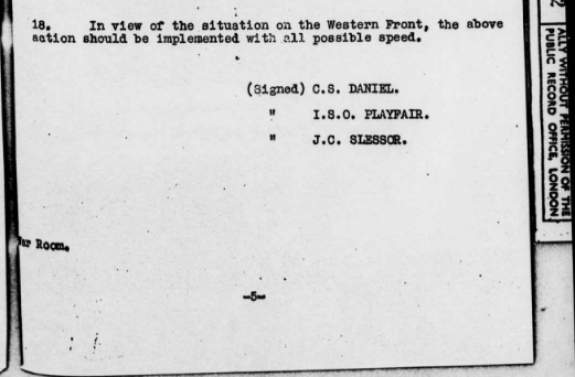
The meeting of the War Cabinet on 19th June 1940 was the meeting that sealed the fate of the idea of defending the Channel Islands as you will see from the minutes below Churchill felt that the islands could be defended by the Royal Navy. He was eventually persuaded otherwise.

War Cabinet meeting 19th June 1940. Held at the National Archives, Kew, File reference:CAB 65-7-67

At the War Cabinet meeting on the 21st of June 1940, they were informed that the military evacuation was complete.

War Cabinet meeting 21st June 1940. Held at the National Archives, Kew, File reference:CAB 65-7-69

On the 22nd of June 1940 a notice was drafted to declare the islands demilitarised. As noted in the minute of the 14th of June there was reluctance to release this. It was felt that releasing this notice too early would invite the Germans to invade. Unfortunately, this meant that the Germans went on to Bomb both Jersey and Guernsey with significant loss of life. You can read about it here. Occupation followed on the 30th of June 1940 and in Jersey’s case

I have seen the idea bandied about that the Channel Islands could have been defended in the same fashion as Malta. This argument simply doesn’t hold water for many reasons not least our geographical location so close to the French coast. There was also a complete lack of anywhere for the population to shelter in the event of sustained bombing or naval bombardment.

The map below will give you some idea of the challenges that would have been faced.

Location of the Channel Islands – Google maps

Malta had immense strategic importance to both the allies and axis forces so it was worth devoting men and resources as well as risking the cost to lives on the island. As you will see as you read on this was not the case for the Channel Islands.

One must remember that in June 1940 the British were smarting from Dunkirk and also facing the prospect of invasion. Precious men and resources could not be spared to attempt to prevent the Channel Islands being taken by force.

Our proximity to the French coast also meant that the Luftwaffe would have been able to operate from airfields that were only a few minutes from their target. The RAF on the other hand would have only been able to operate from airfields in the south of England which would mean that fighter aircraft would have only had approximately fifteen minutes over the islands before having to return to refuel and re arm. This would involve a round trip of some two hundred or more miles as opposed to sixty to eighty miles for the Luftwaffe. This continues to be an issue when planning the proposed operations to retake the islands. You will see this problem considered later on in this post.

Even if the Channel Islands had been able to be held initially the logistics of keeping them re supplied would have been impossible. The Germans were to find this out after D-Day in 1944. The allied occupied French coast meant they were unable to get anything but a few ships through to the islands.

No attempt or plan to retake the islands?

This aspect of the of the myth is patently untrue. At the time nobody outside of those involved in the plans would have been aware of them because by their very nature they were secret. The British population were therefore unaware of these at the time, including those Channel Islanders that had left the islands. Those still in the islands equally so for obvious reasons.

There were a number of detailed plans to retake one or more of the Channel Islands throughout the war. They reached differing levels of planning and training.

The first of these was Operation Attaboy in March 1941 which I wrote about in detail here.

The second was Operation Blazing strangely enough one year later than Operation Attaboy. My detailed analysis of Blazing is here.

Operation Constellation was a plan in March 1943 that considered retaking one or all of the Channel Islands. This became Operation Concertina when they again chose Alderney.

If you read my blog posts linked above, you will see that Lord Mountbatten and Vice-Admiral John Hughes-Hallett amongst others were frequently pushing plans to retake the Channel Islands right from the outset. Often to the extreme annoyance of General Sir Alan Brooke.

Churchill was also involved in supporting the plan some of these operations.

“Arrived just in time to go to COS meeting to turn down proposed attack on Alderney Island [Channel Islands] as a large raid by Guards Brigade.”

Brooke notes in his diary on 6 May 1942

In addition to these large-scale operations there were many more smaller raids and the order to pursue this course of action as early as the 2nd of July 1940.

War Cabinet meeting 2nd July 1940. Held at the National Archives, Kew, File reference: CAB 65-14-2

These gave rise to a number of operations running right up to December 1943, after which raids were stopped due to preparations for D-Day.

The initial flurry of raids in 1940 were Operation Anger 8th July 1940, Operation Ambassador 14th / 15th July 1940 and an intelligence gathering mission on 3rd / 4th September. You can read about these operations here.

In addition to these raids the following raids were carried out.

Paul Woodage of WW2TV was kind enough to have me on to talk about Commando Raids on the Channel Islands which also covers the planned large-scale operations discussed above. You can watch it on the YouTube link below.

What about negotiating a surrender?

It is frequently overlooked that there was extensive leaflet dropping following D-Day to encourage the garrison to surrender and at least one if not more attempts to secure a surrender. The October 1944 edition of the Channel Island Monthly Review notes a brief account of what happened.

From the October 1944 Channel Islands Monthly Review

Should you wish to find out more about this daring operation to attempt to secure a surrender, using a German General who was a POW, you can read about it here.

Let’em starve

Nobody outside of government was aware of this comment at the time but when it emerged there was much debate over whether Churchill meant the German garrison or the population as well. You can find my analysis of this here.

The comment was interpreted by many to be applicable to both the German Garrison and the population. Take a look at the blog to understand this complex situation.

The Verdict

The assessment in this blog post is in no way a criticism of those that were alive at the time and formed this view. I would have formed the same view had I been sat here trapped in Guernsey for five years and suffering numerous privations.

I will let you form your own opinion as to whether you think Churchill is guilty as charged or not guilty. Hopefully the above analysis will provide you with the information to draw your own conclusions.

It would however be remiss of me not to throw in my two penn’orth! Having looked at the evidence that has become available over the years, which I have set out above, I believe that Churchill is not guilty of abandoning or forgetting the Channel Islands.

My rationale for this opinion is:-

The Channels Islands were totally indefensible by 1940. Any attempt to defend them would have just led to them being bombed into submission. This would have resulted in enormous loss of life and some of you reading this may never have been born as a result.

The various intelligence gathering operations and commando raids clearly demonstrate that the Channel Islands were not forgotten.

Planned operations to retake one or more of the Channel Islands despite the fact that they were of no strategic advantage demonstrates that we were not forgotten. These operations didn’t take place, but were very seriously considered, trained and planned for, something that they wouldn’t have expended time, effort and resources on if we were forgotten or abandoned.

Churchill was not making these decisions alone. Whilst he was the figurehead of the government, he was guided by the War Cabinet and the Chiefs of Staff.

Whatever else he might have done wrong throughout his career and whatever else you think of him I don’t think on this occasion he is guilty as charged.

That’s all folks

I hope you enjoyed this blog post. I suspect I may get some incoming flak for this post. Ironic given the one thing we didn’t have in 1940 was anti-aircraft guns.

I hope that you have enjoyed reading the blog post.

I also co-host a podcast with Keith Pengelley in which we talk about the occupation of the Channel Islands month by month using first hand accounts, diaries and our research in the archives. You can find us on all the major podcast services. Just search “Islands at War” or visit our podcast page here.

You can also follow the blog on Twitter at @Fortress_Island where I share other information and photographs. If you prefer Facebook I also have a page there.

If you would like to receive email notifications of future blogs, you can sign up to the right of this blog post or here. Feel free to look around the website, where I have categorised posts to make them easier to find and other resources such as tours, places to visit and films that may be of interest.

If you have questions or information to share you can contact me by email on Contact@Island-Fortress.Com.

You can also find articles, podcasts, TV appearances and other social media etc here.


I will be adding more as time permits. Thank you for taking the time to read this, and I hope you enjoyed it. Please share it on social media or add a comment if you did. Feedback is always appreciated.

Also happy to be contacted with questions about the war in the Channel Islands, media appearances, podcasts etc.

© Nick Le Huray

THE OCCUPATION STARTS – FIVE LONG YEARS UNDER THE JACKBOOT!

30 June marks the anniversary of the arrival of the Germans in 1940. This followed an air raid on 28 June which you can read about on my last blog, just scroll down or click here

If you want to listen to me talk about this on the Islands at War podcast we talk about the events on the player below.

A German aircraft, a Dornier Do.17 similar to the one pictured below, had landed earlier in the day but had beaten a hasty retreat when attacked by three RAF Blenheims that were in the area. The first German Oberfeldwebel Roman Gastager, a Dornier Do 17 crewman from Fernaufklärungsgruppe 3.(F)/123. This is recorded in Simon Hamon’s excellent book “Channel Islands Invaded: The German Attack on the British Isles in 1940 Told Through Eye-Witness Accounts, Newspapers Reports, Parliamentary Debates, Memoirs and Diaries” 

Image from the Sunday Mirror 29 September 1940 © Reach PLC. Image created courtesy of THE BRITISH LIBRARY BOARD.
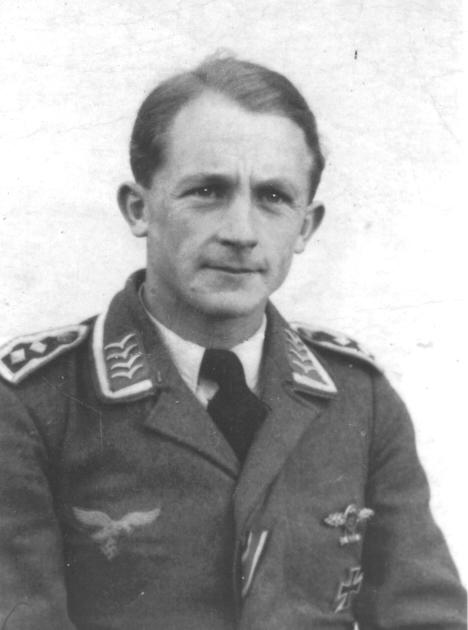
Roman Gastager as Oberfeldwebel in late 1944 Photo from https://www.imoebi.de/Gastager.htm were you can read more about him.

Having found the island undefended they reported back to their base at Cherbourg and troops were sent over to occupy Guernsey. The occupation began when German troops arrived from Cherbourg on 30th June 1940 aboard JU 52 transports.

Guernsey ARP Logbook (AQ696/08) held at the Island Archives. Photo © Nick Le Huray

Jersey was occupied one day later on 1 July 1940.

Below are a selection of photographs of their arrival and some further information and reading on the subject.

Illustrated London News – Saturday 10 August 1940 © Reach PLC. Image created courtesy of THE BRITISH LIBRARY BOARD.
Castle Cornet and St Peter Port seen from a German aircraft.
Photograph is on display at the German Occupation Museum. These are men of the 396th Infantry Regiment who arrived from Cherbourg.
Photograph from Das Bundesarchiv more troops at Guernsey Airport.
The Germans taking down the flag at Guernsey Airport. Photograph from Das Bundesarchiv.
Commandeered Guernsey truck being used to refuel a ME 109 0f KG53 Photograph from Das Bundesarchiv
Photograph from Das Bundesarchiv
Messerschmitt-Bf-109E3-4.JG53-La-Villiaze-Guernsey-1940

If the Airport on the current site hadn’t been completed in 1939 then they may have had a slightly tougher time in landing as the previous aerodrome was at L’Eree on the coast and is a wetland that is now a nature reserve. L’Eree had a runway of 450 yards and a very short lived operational life.

A modern view of the original aerodrome at L’Eree Photo © Nick Le Huray

Luckily for the Germans the airport had been moved to the current site and had been opened in May 1939. It had four grass runways, night landing facilities and direction finding equipment. Taken over by the RAF in September 1939 and vacated by them in June 1940 they took the precaution of sabotaging the equipment before they left. I wrote about the experiences of some RAF Pilots in June 1940 who were based in Guernsey. You can read about it at
A TALE OF TWO PILOTS, HURRICANE GIRLS & A FRENCHMAN!

Soon after their arrival orders were issued to islanders with the threat of any attempt to cause trouble would lead to St Peter Port being bombed.

Orders of the Commandant

In subsequent months there followed Junkers 52 troop carriers, Dornier DO 17 bombers, Heinkel He 111 bombers, Henschel Hs 126 reconnaissance aircraft, ME109 fighters and Junkers Ju 87 dive bombers.

Display at the German Occupation Museum about the arrival of the Germans and items collected by locals.

If you want to find out more about the arrival of the Germans you can find a summary here

In my blog about the life of a doctor in Guernsey he talks about the arrival of the Germans. You can read it here.

I hope that you have enjoyed reading the blog post.

I also co-host a podcast with Keith Pengelley in which we talk about the occupation of the Channel Islands month by month using first hand accounts, diaries and our research in the archives. You can find us on all the major podcast services. Just search “Islands at War” or visit our podcast page here.

You can also follow the blog on Twitter at @Fortress_Island where I share other information and photographs. If you prefer Facebook I also have a page there.

If you would like to receive email notifications of future blogs, you can sign up to the right of this blog post or here. Feel free to look around the website, where I have categorised posts to make them easier to find and other resources such as tours, places to visit and films that may be of interest.

If you have questions or information to share you can contact me by email on Contact@Island-Fortress.Com.

You can also find articles, podcasts, TV appearances and other social media etc here.


I will be adding more as time permits. Thank you for taking the time to read this, and I hope you enjoyed it. Please share it on social media or add a comment if you did. Feedback is always appreciated.

Also happy to be contacted with questions about the war in the Channel Islands, media appearances, podcasts etc.

© Nick Le Huray

Exit mobile version
%%footer%%